Why a pedestrian zone makes campus safer
Rise of motorized mobility devices
Electric mobility devices like e-bikes and e-scooters are more popular than ever, with an estimated 1.44 million e-scooters sold and 2.2 million e-bikes imported to the U.S. in 2025 alone.
As these devices become more common, related injuries and deaths have unfortunately become more common as well. According to the US Consumer Product Safety Commission, injuries related to e-scooters increased by 655% between 2017 and 2024, and injuries related to e-bikes increased by 835%.
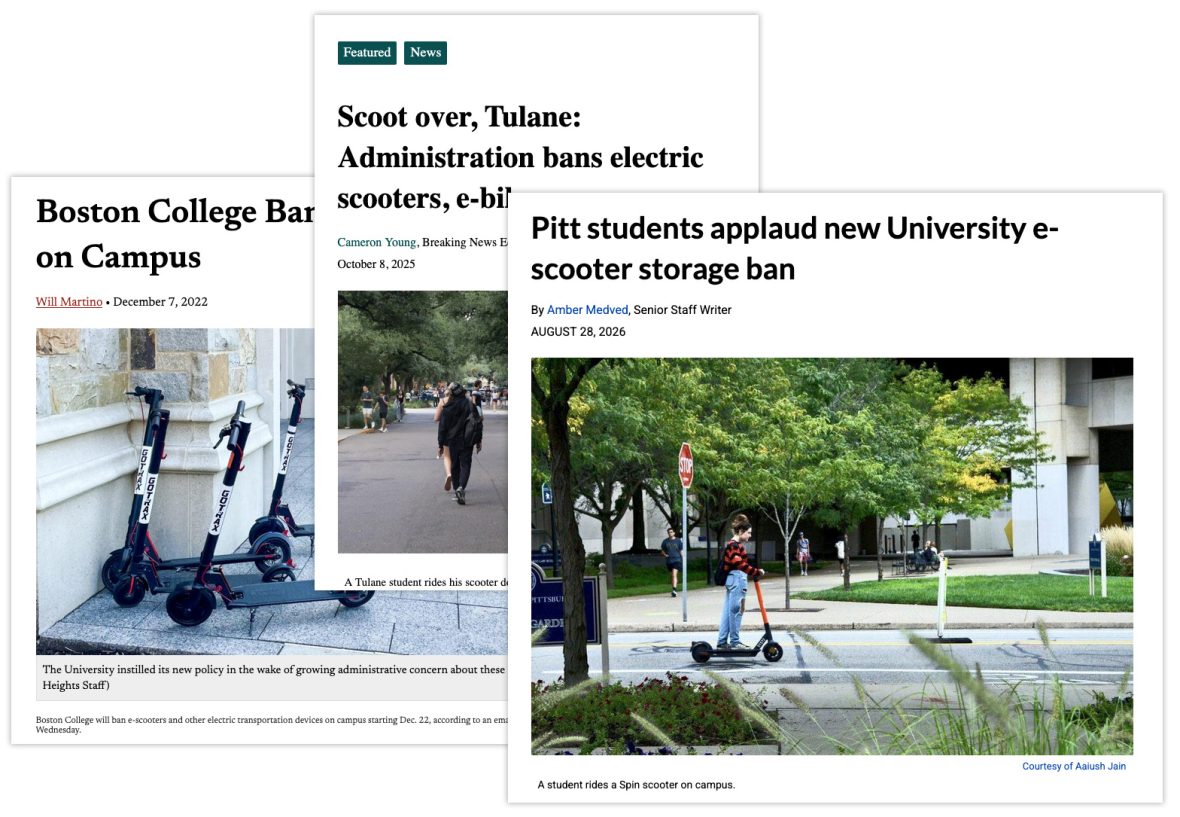
Universities, counties and other groups across the country are taking steps to regulate how motorized mobility devices can be used. Some have effectively banned devices outright, like Pittsburgh, Boston or Tulane. Others have implemented restrictions, ranging from speed limits to sidewalk bans.
UNC Charlotte’s approach
UNC Charlotte’s campus community is no stranger to the increase in electric device popularity and their related risks. University Police and Public Safety have also noticed a significant increase in device-related injuries and collisions on campus in the past few years.
At the same time, motorized mobility devices are often a more affordable, convenient and sustainable means of transportation, especially compared to driving a personal vehicle around campus.
Rather than an outright ban, consultants for the Mobility Master Plan recommended restrictions on the areas of campus with the most foot traffic. Areas around academic buildings in central campus and around the Popp Martin Student Union were identified as the highest risk.
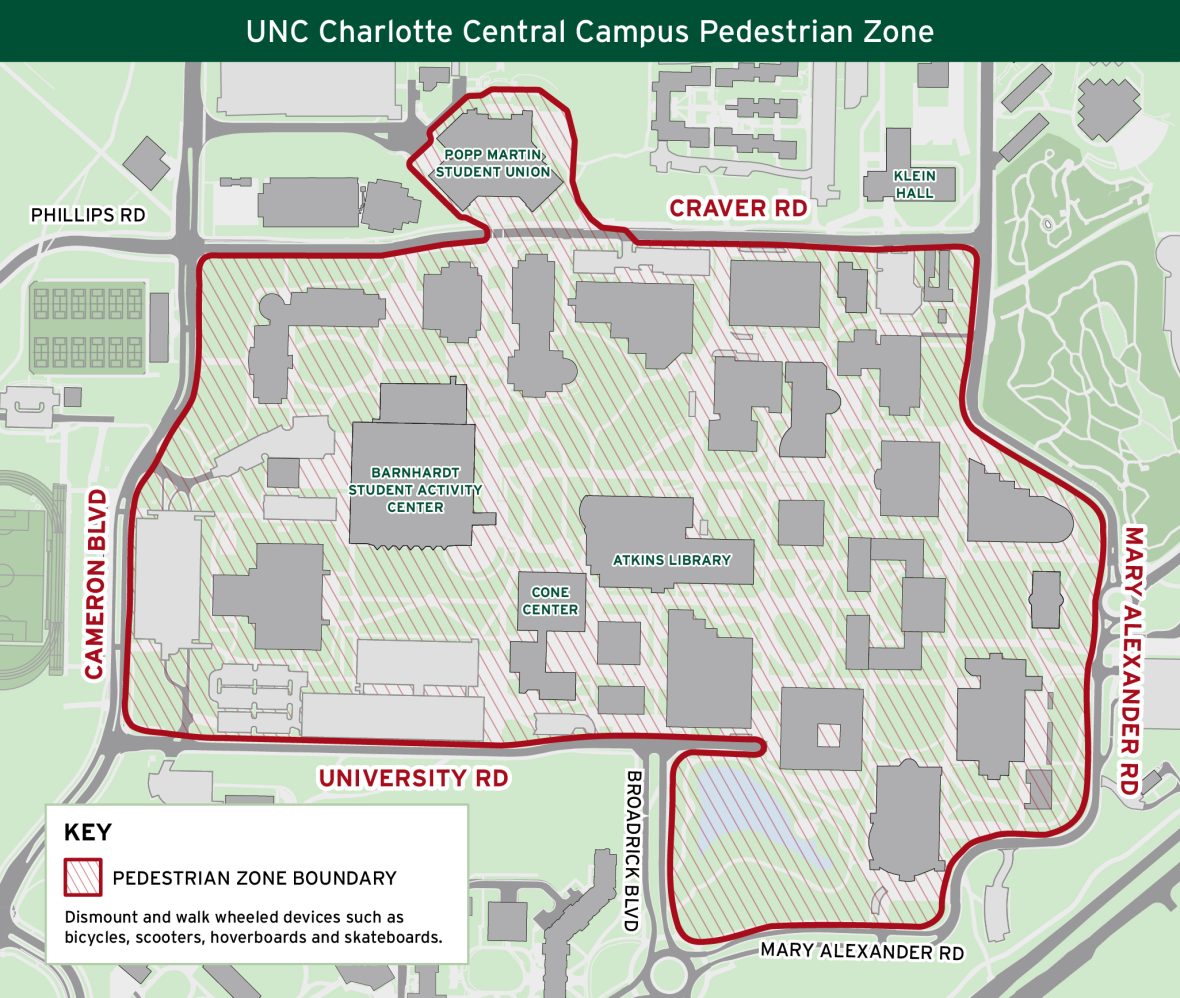
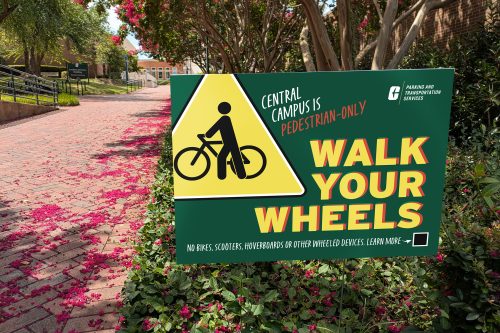
University leadership backed the decision to institute a dismount zone surrounding central campus and the Popp Martin Student Union. Riders must now walk or carry their devices when traveling through the pedestrian zone.
This compromise allows riders to continue using their devices while reducing the risk of rider-pedestrian collisions in the campus core.
The pedestrian zone is just one step in a larger plan to create a safer campus that’s easier to navigate. New infrastructure that serves device riders – such as bike lockers, electric device charging stations and protected bike lanes – is outlined in the Mobility Master Plan and will be reviewed for funding and implementation as appropriate.
Device safety tips
In addition to respecting dismount zones, riders can take steps to protect themselves and others from injury:
- Always follow the rules of the road, including staying under the speed limit, stopping at traffic lights and yielding to pedestrians.
- Wear a well-fitted helmet and reflective gear.
- Slow when passing pedestrians and provide an audible warning when passing from behind.
- Store devices properly in bike lockers or public bike racks so they don’t become tripping hazards.
FAQs
What if I use my bike or scooter to get to campus?
Riders can still commute to and from campus, travel around the outside of the pedestrian zone, and ride on most other paths and streets on campus.
What if I’m riding a bike or scooter and I want to go to a location in central campus?
Riders can walk their device through central campus and store it at a public bike rack near their destination.
How will you support bike and scooter riders?
Future infrastructure will benefit riders and make stopping outside central campus more convenient, such as proposals for more secure storage and charging stations in the Mobility Master Plan.
What if I use a device for accessibility reasons?
Pedestrian zone rules do not apply to mobility aids such as wheelchairs or mobility scooters. Mobility aid users fall under the pedestrian umbrella. Contact the Office of Accessibility and Accommodations for more information.
Why aren’t the Dismount Zones being enforced?
The University is focusing on education and awareness first to avoid ticketing or punishing riders for a fairly new policy. Further action to enforce the dismount zones is being discussed.